
There is a small flag that goes up in a front window when someone in the house joins the fight, and most people who see one have no idea what it is. Fewer still know who is allowed to hang one. The rule that trips families up most often is not the one they expect.
Here is what the Blue Star banner is, who can display it, and why the most common assumption about it is wrong.
What a Blue Star banner actually is
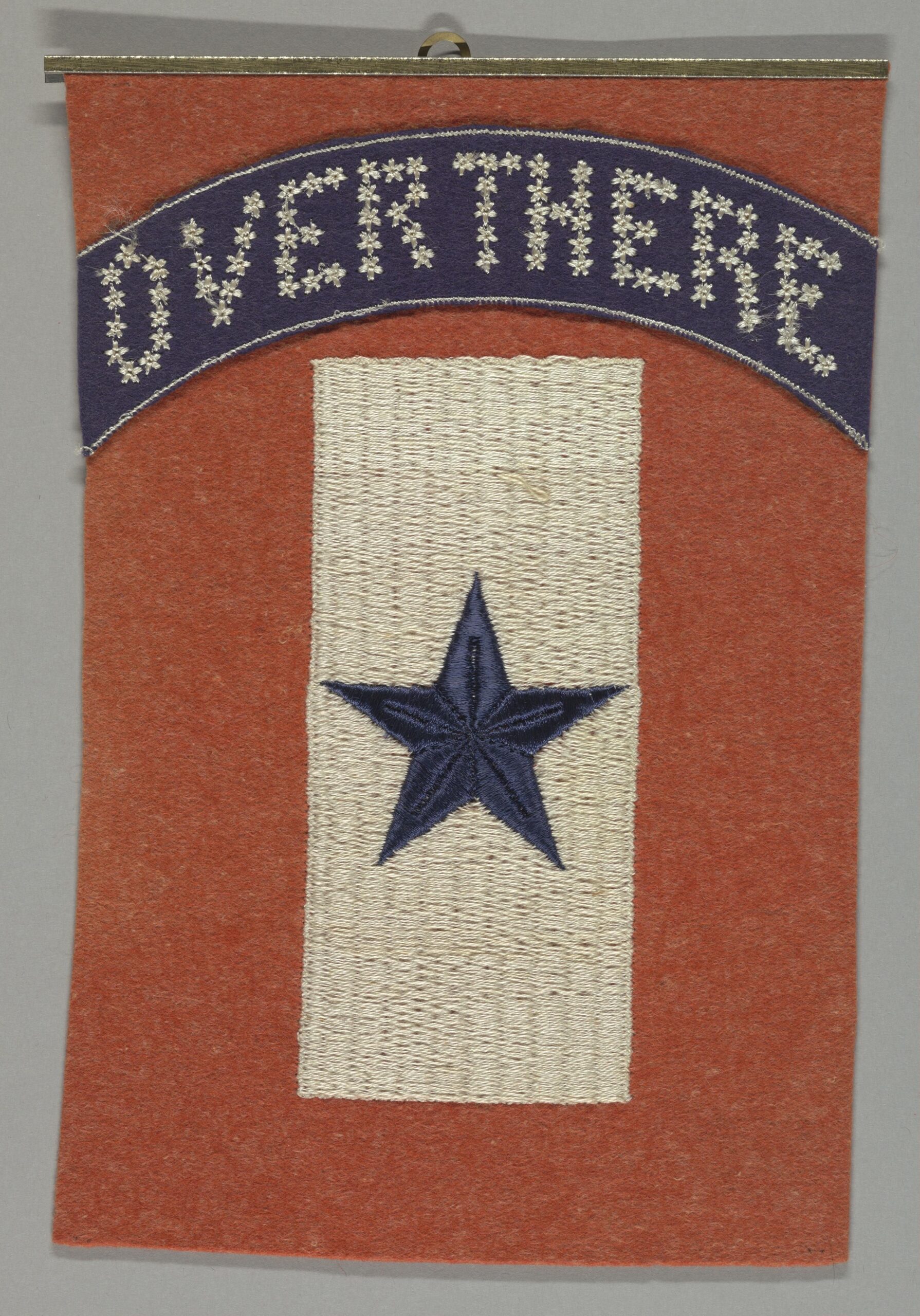
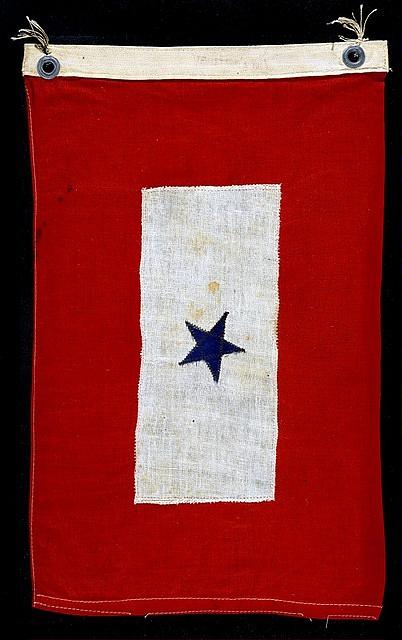
It is a small vertical flag: a white field, a red border, and a blue star in the middle. One star for each family member currently serving. It hangs in a window of the family home, facing out, so the street knows.
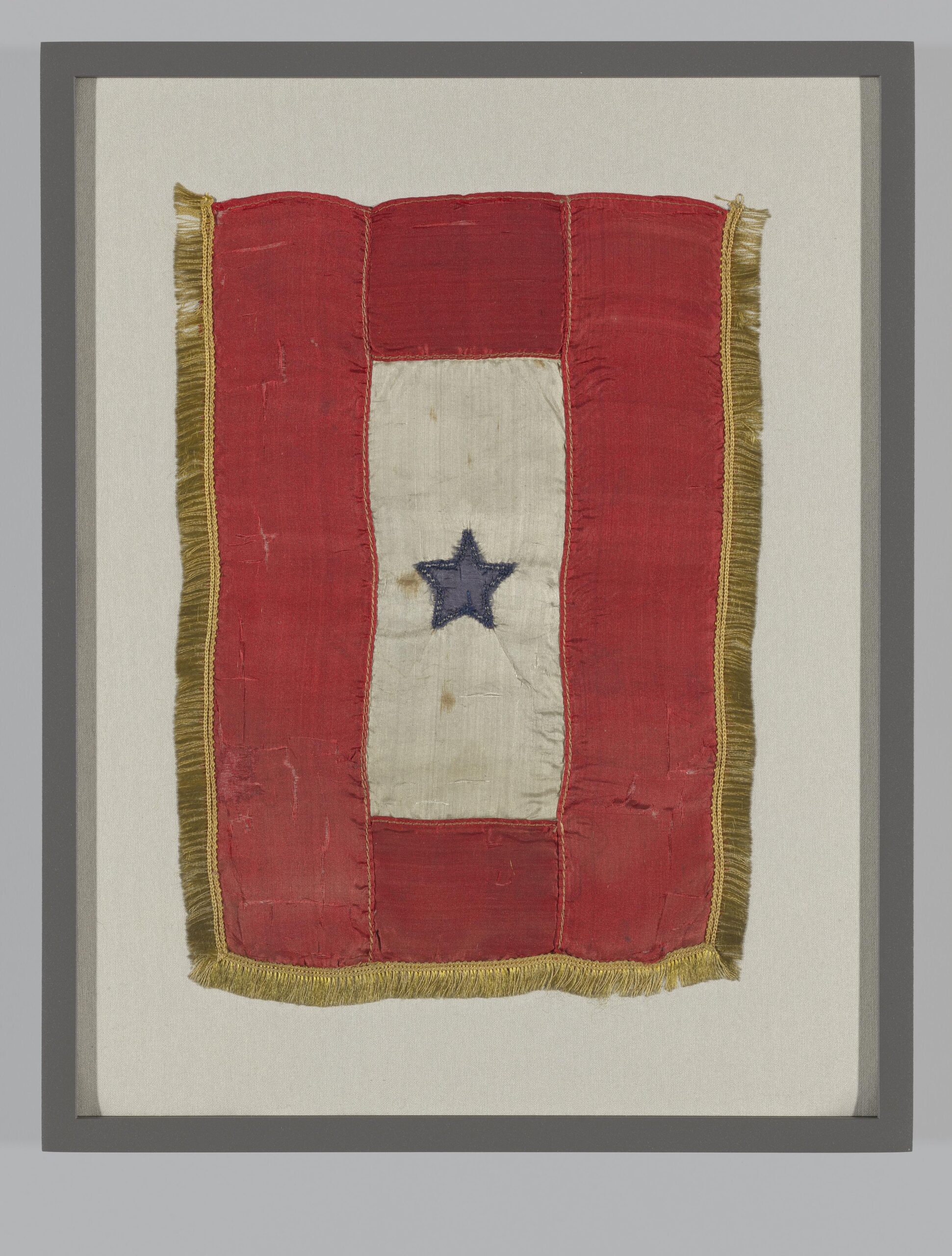
It was designed and patented in 1917 by an Army captain named Robert L. Queisser of the 5th Ohio Infantry, who had two sons serving in the First World War. The idea caught on almost immediately. By the Second World War the banners were in windows across the country, and a 1942 poster campaign counted more than sixteen million service stars hanging in American homes.
It spread fast. On 24 September 1917 an Ohio congressman read into the Congressional Record that the mayor of Cleveland, the city’s Chamber of Commerce and the governor of Ohio had all adopted the flag.
The flag is not decoration and it is not a souvenir. It is a statement about who lives in that house.
Who is allowed to display one
This is where it gets less tidy than people expect. The authority comes from 36 U.S.C. 901, which says a service flag approved by the Secretary of Defense may be displayed in a window of the residence of people who are members of the immediate family of someone serving in the Armed Forces during any period of war or hostilities.
And then it stops. The statute never defines immediate family. It uses the phrase and moves on.
The working definition comes from Department of Defense guidance and from the organisations that have handed these banners out for a century. In practice it covers:
- Spouse
- Parent, including step parents and adoptive parents
- Child, including step children and adopted children
- Sibling, including half siblings and step siblings
Grandparents, cousins, in laws and close friends are outside it. That is not a judgement about how much anyone cares. It is simply where the line was drawn.
You do not have to be deployed
This is the one that catches families out, and it is worth saying plainly.
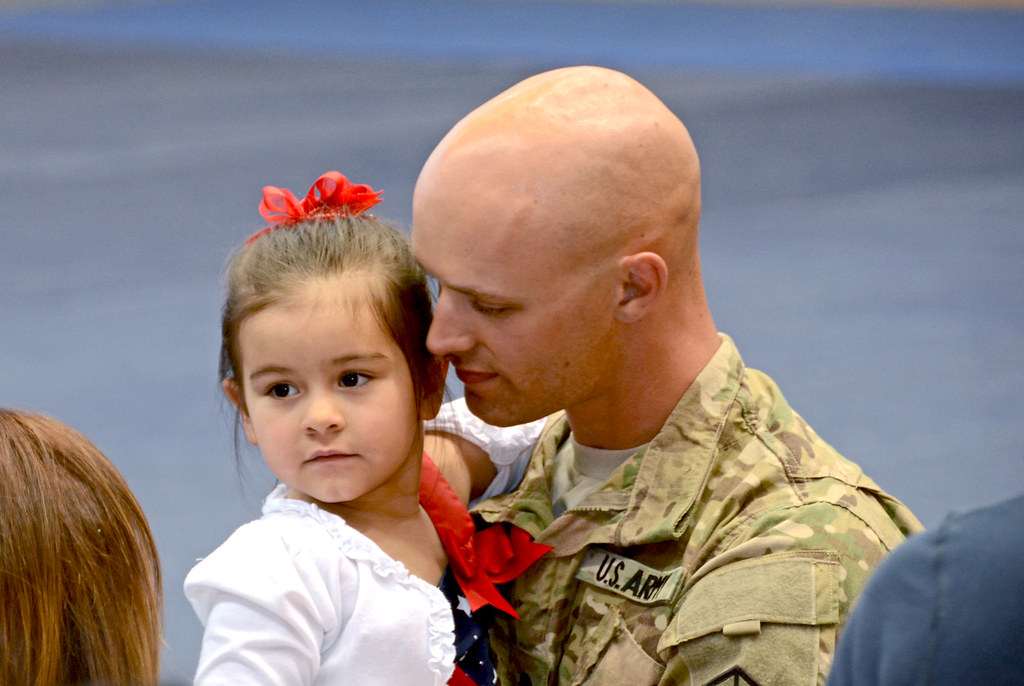
There is no requirement that the service member be deployed, overseas, or in a combat zone. The test in the statute is service during a period of war or hostilities, not location. A soldier at a base three hours from home counts. So does a sailor who has not left the country.
Plenty of families quietly decide they have not earned it yet, and wait for orders that may never come. Other families take the stricter reading and hang the banner only during a deployment. Both choices are made in good faith, and neither is a rule. If your person is serving, the banner is yours to hang.
What the gold star means
If a service member dies, the blue star is covered by a smaller gold star, and the banner stays in the window.
The gold comes from 1918, when President Wilson approved a suggestion that mothers who had lost a child in the war wear a gold gilt star on the black mourning band rather than the band alone. The idea moved from the armband to the banner and stayed there.
On a banner carrying more than one star, the gold star goes at the top, with the remaining blue stars beneath it. The blue is not removed. The family is still a family with people serving, and the one they lost is still counted.
This is the part to get right if you are a neighbour rather than a relative. A gold star is not a decoration and the family did not choose it. The phrase Gold Star family has a precise meaning and it is not interchangeable with Blue Star. Confusing the two in front of someone who carries the gold one is a genuinely painful mistake, and it is easily avoided once you know the difference.
The silver star banner almost nobody knows about
There is a third version. The Silver Star Service Banner honours service members wounded or made ill in combat, and it was formally recognised by the House of Representatives in Resolution 855 on 21 April 2010. The first of May is Silver Star Service Banner Day.

It has never caught on the way the other two did, which is why most people have never seen one. If you have wondered what the silver star in a window meant, that is the answer.
How to hang it properly
The banner is designed for a window, facing the street, hung vertically. If you fly it alongside the national flag, the national flag should be the larger of the two and should take the position of honour. The service flag follows the same proportions as the US flag, a ratio of ten to nineteen.

You take it down when the service ends. Many families keep it folded afterwards, the way you would keep anything that marked a particular stretch of years.
Can a girlfriend or boyfriend display a Blue Star banner?
Not under the immediate family definition, no. Partners who are not married fall outside it, as do fiancees. This is one of the places where the rule has not caught up with how people actually live, and a lot of families simply use their own judgement about it.
Can you display a Blue Star banner for a veteran?
No. The banner marks current service. Once your person has left the Armed Forces, the banner comes down. There are plenty of other ways to mark having served.
How many stars can one banner have?
Up to five, one for each serving member of the immediate family.
Is it a Blue Star flag or a service flag?
Both. Service flag is the formal term used in the law. Blue Star banner is what almost everyone actually calls it.
If you are the one in the window
The banner says something out loud that military families usually keep to themselves. So does what you wear. We make shirts and hoodies for the people who stay behind as well as the people who serve, and the wording on them is chosen carefully: no reproduced emblems, no seals, no insignia, because those belong to the services and not to us. The military family range is here if you want a look.