

The blue field always goes to the flag’s own right, which is your left as you look at it. The flag can fly after dark if you light it. Nobody will fine you for getting either wrong, because the Flag Code carries no penalty for private citizens. It is a code of manners, not a statute with teeth.

Most people who buy a flag for the porch want to get it right and are quietly worried they are already getting it wrong. That worry is usually misplaced. The rules are short, they are mostly common sense, and the handful that trip people up are the same handful every time.
What the Flag Code actually is
The United States Flag Code sits in Title 4 of the US Code. It was written as guidance for civilians, and a Congressional Research Service review of it is blunt on the point: the Code prescribes no penalties for non compliance and includes no enforcement provisions. It is a guide to be followed voluntarily.
That matters because a lot of flag advice online is delivered as though a violation lands you in court. It does not. The Code even allows room for judgment, noting that uses it does not specifically cover may still be acceptable so long as proper respect is shown.
If your question is about wearing the flag rather than flying one, we wrote that up separately in can you wear the American flag. This piece is about the physical flag on a pole or a wall.
Where the blue field goes
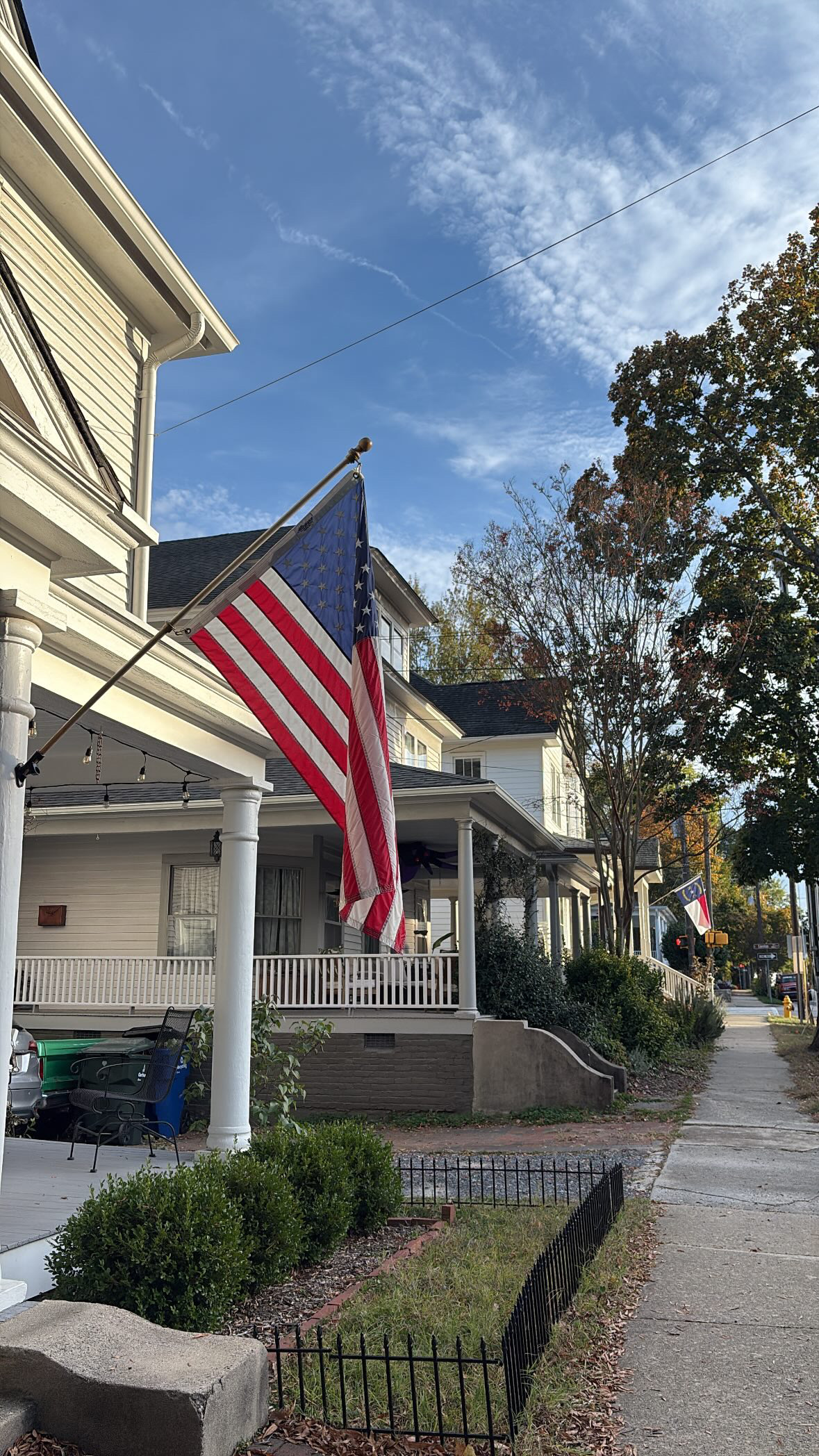
This is the rule people get wrong most, and it is the easiest to fix.
The union, meaning the blue field of stars, is always uppermost and to the flag’s own right. The flag’s right is the opposite of yours, so when you are looking at it, the blue sits top left. That holds whether you hang it flat against a wall or turn it vertically. Turning a flag on its side does not rotate the union with it. You move the union so it stays top left from where you are standing.
On a porch bracket at an angle, the union goes at the peak of the staff, furthest from the house.
Flying it after dark
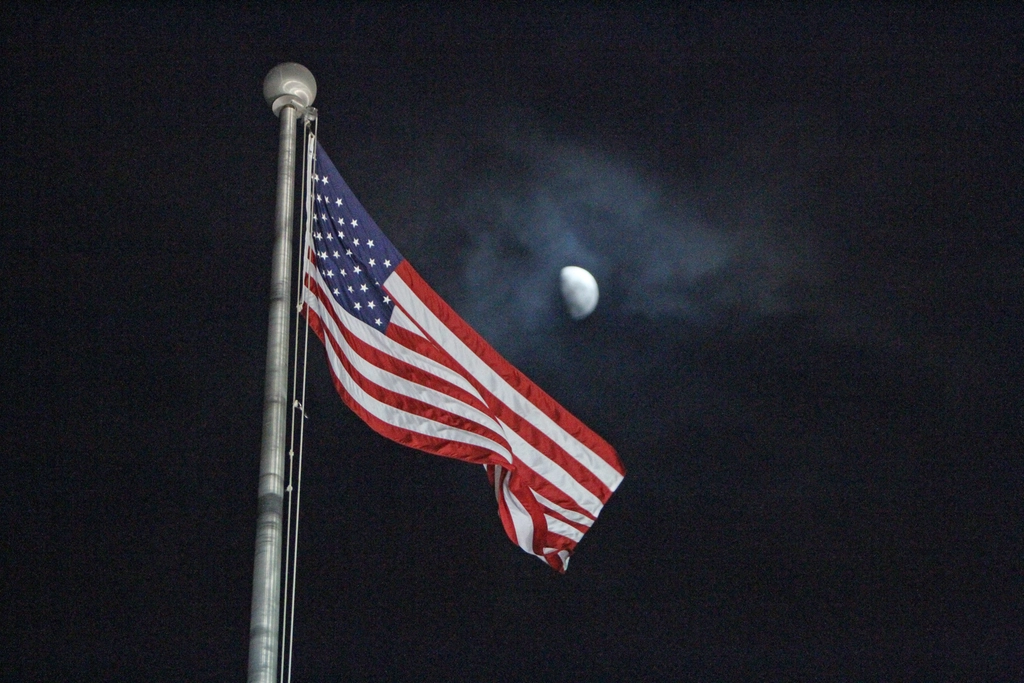
The default custom is sunrise to sunset. The Code then adds the exception almost everyone needs: the flag may be displayed twenty four hours a day if it is properly illuminated during darkness.
Properly illuminated does not mean floodlit. A porch light that makes the flag recognizable to someone passing the house is the standard people generally work to. If you are not going to light it, take it down in the evening. Both options are correct. Leaving it up unlit all night is the one that is not.
Rain, snow and the all weather question

The old rule was simple: do not fly it in bad weather. The Code now carves out an exception for all weather flags, which is to say a flag made of material built to survive it. Nylon and polyester flags sold today almost all qualify.
The practical version is about wear rather than protocol. A flag left out through a wet winter will fray at the fly end and fade, and a frayed flag is the one that eventually needs retiring. Bringing it in during a storm is less about manners than about making it last another season.
Half staff, and who actually decides

Half staff is not something a household decides for itself, and this surprises people.
Under the Flag Code, the President orders the flag to half staff on the death of principal figures of the United States government and on the death of a state governor, along with proclamations for periods of national mourning. For a President or former President it runs thirty days. Governors can order it for their own state, and heads of some federal agencies can order it on grounds they supervise. Private citizens generally follow the proclamation rather than lead it.
The mechanics catch people out too. You raise the flag briskly to the peak first, then lower it to half staff. At the end of the day you raise it back to the peak before taking it down. On Memorial Day it sits at half staff until noon only, then goes to the top of the staff for the rest of the day.
Retiring a flag that is past saving

When a flag is worn beyond repair and is no longer a fitting emblem to display, the Code says it should be destroyed in a dignified way, preferably by burning.
That sentence alarms people who have only ever seen flag burning as protest. The difference is entirely in the intent and the setting. A retirement ceremony is a quiet, deliberate thing, and most American Legion posts, VFW posts and Scout troops run them and will take a worn flag off your hands. Many fire departments collect them too. You do not have to do it yourself, and if the idea sits badly with you, handing it to a post that does this properly is the normal route.
A few smaller ones worth knowing
- Nothing above it on the same staff. On a single halyard with other flags, the US flag goes at the top.
- It should not touch the ground. If it does, nothing ceremonial is required. Check it, clean it if it needs it, carry on.
- Folding is tradition, not law. The triangular fold is a custom, and the various meanings assigned to its thirteen folds are not in the Code at all.
- Upside down means distress. It is a signal of extreme danger to life or property, which is why it reads so loudly when used as protest.
If you would rather wear the flag than fly it, our Flag Classics designs treat it as artwork rather than reproducing the flag itself, which sidesteps most of this and makes for a better shirt besides.
Frequently asked questions
Can I fly the American flag at night? Yes, as long as it is properly illuminated during the hours of darkness. Without a light, the custom is sunrise to sunset.
Which side does the blue field go on? The flag’s own right, which is your left as you face it. This stays the same whether the flag hangs horizontally or vertically.
Is it illegal to break the Flag Code? No. The Code has no penalties and no enforcement provisions for private citizens. It is guidance.
Can I fly my flag at half staff whenever I want? You can, but half staff is normally set by presidential or gubernatorial proclamation. Doing it outside one makes a statement people may read in ways you did not intend.
What do I do with a worn out flag? Retire it rather than bin it. American Legion posts, VFW posts, Scout troops and many fire departments accept flags for retirement ceremonies.
Does the flag have to come down in the rain? Not if it is an all weather flag, which most modern nylon and polyester flags are. Weather is mostly a question of how long the flag lasts.